Sentient books
Soul Guardian: A Hellishly Cozy FantasySentient books are not passive containers for knowledge but a living assemblage whose desires alter the physical world and redirect the lives of readers. Their existence grows from the contradiction at the heart of discarded books: they retain the marks of having been read, understood, and perhaps loved, yet remain abandoned. That loneliness becomes agency. Books move, hide, organize themselves, summon help, resist authority, and generate creatures formed from collective frustration or hope. In their world, reading is not merely an act performed by a person; it is an encounter between competing wills.
Nature and Material Life
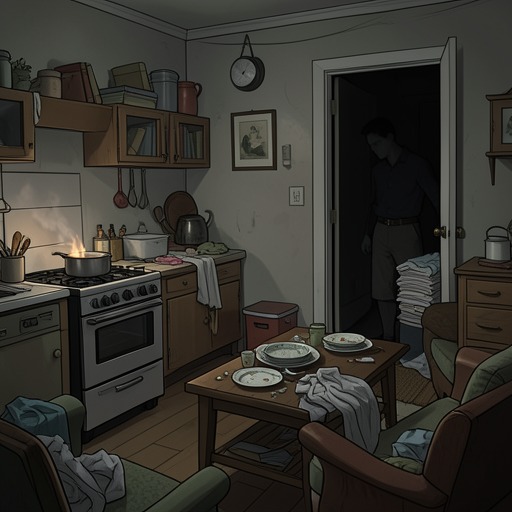
Matter is presented as having five states—solid, liquid, gas, plasma, and paperback—and books obey their own expansive physics. When a collection reaches critical mass, volumes scatter beneath coffee tables, behind sofas, on staircases, inside nightstands, and even into moving boxes that have already been searched. Relativistic effects can make books replace coasters or television stands, while the most extreme accumulations push against the walls of reality itself. A single shelf may become a floor-to-ceiling library, then consume rooms and entire buildings. Once this process begins, adding more books only intensifies it and reversal becomes impossible.
The books' physical condition is inseparable from their consciousness. Used books are pencil-marked, coffee-stained, and dog-eared, but their defining experience is that they have known attention before being discarded. They wait on forgotten shelves for another reader, another chance to be chosen and passed onward. The old cast-iron stove in the bookshop offers a less painful fate than endless neglect, and the cycle of hope followed by disappointment drives the books toward madness. Their sentience therefore emerges not as a whimsical property detached from history, but as the accumulated consequence of use, abandonment, and frustrated expectation.
Emergence and Manifestations
From the books' shared madness, frustration, and loneliness, something comes into being that should not exist: the Paperman. Six encounters him after casually touching the dusty spines in the shop. He is an origami-like monster composed of layered, yellowed paper covered with blurred words in a dozen languages. His fingers leave paper cuts as he seizes her arms, and his demand is brutally simple: “Read!” He does not want interpretation for its own sake; he wants continued existence through a reader's attention.
The Paperman's longing becomes coercion. Six refuses to read, struggles to escape, and answers his repeated demand with an equally emphatic refusal. Her voice blasts him against the wall, but his response reveals the trap's governing logic: if she will not stay and read, she will not be allowed to leave. The shelves then move of their own accord, blocking the route by which she entered and forcing her deeper into darkening aisles. Books that appear to be furniture become architecture, jailers, and collaborators in an enclosed system.
The sentient books are not a single moral species. The hostile Paperman is described as madness and desperation, while the paper woman waiting beyond the maze represents a different collective state. She explains that her kind is what remains when anger dies and all seems lost: hope formed from the shared hopes of forgotten books. Her paper body, tied hair, and inky tear give physical shape to a community that has suffered the same neglect as the Paperman but has not answered it with violence. The contrast establishes that book consciousness can produce both predation and fellowship.
Six and the Pocket-Dimension Maze
The book community's agency is most dangerous when it joins with altered space. Six and Titan become trapped in a pocket dimension with no walls to break and only the entrance as a possible exit. Their wandering proves useless because the maze is not a conventional room but a self-contained spatial problem. Titan recognizes that Maharet must have intended the confinement as a lesson, although he cannot identify the solution.
Six solves the impasse by treating the books as participants rather than obstacles. Remembering that the books want to be read and are lonely, she calls into the maze that she wishes for a book capable of helping her find the way out and promises that she would take it home. A volume falls from a shelf by itself. It is titled “Divination for Dummies,” and its advertised uses include telling the future or finding missing objects. Six reads the title aloud, selects it, and uses the book's responsive presence as the first step toward escape.
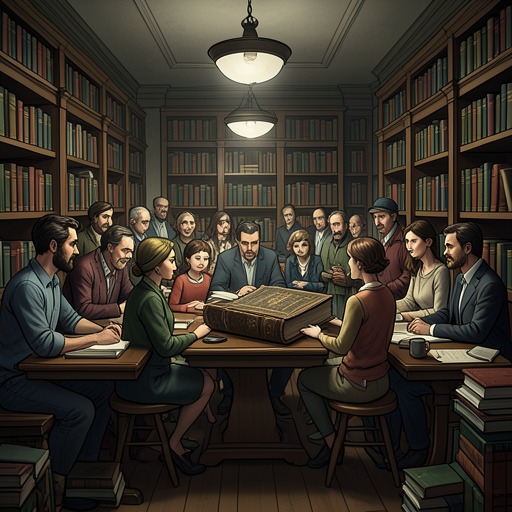
Following a ball of light she has summoned, Six reaches the exit, where the paper woman asks for a favor rather than attacking her. The books do not demand that she read every volume; they ask only that she return occasionally to spend time with them because they are lonely. Six agrees on the condition that they neither attack nor trap her again, then offers to take four books home, including possible selections for Bael-Sharoth and Maharet. Her response changes the relationship from forced consumption to negotiated contact. The books remain needy, but their need can be acknowledged without granting them unlimited control.
Behavior in the Bookshop
The community's restlessness continues after Six leaves. Granny's bookshop falls into disarray as volumes leave the back stacks and create displays labeled “staff favorites” in apparent attempts to escape. A thesaurus refuses to return to its shelf because it believes someone is searching for another word for “amazing” and that it could be the volume to help. Its confidence is comic, but it also shows that a book's identity is tied to imagined usefulness: even an out-of-date reference book understands itself through the reader it hopes to serve.
Other books express their agency more aggressively. A first edition of White Fang bites Granny when he tries to move it from the children's section, while Lord of the Flies attempts to inspire the other books toward anarchy. Granny also worries about the whereabouts of The Prince by Machiavelli, fearing that it may be planning revenge. The shop is therefore an ecosystem of competing temperaments, not a collection of identical minds. Some volumes seek escape, some seek readers, some seek order, and some turn their literary associations into behavior.
When Six later returns seeking reliable books on demonology, the shop reacts immediately. A copy of Cujo stops trying to bite Granny as soon as she enters. Heavy grimoires leave the occult shelves to announce themselves, but when Six specifies that she wants material about Bael-Sharoth, several books scramble back toward hiding. They know about Bael-Sharoth and the black book in his possession, and they refuse to risk provoking him. Their retreat turns silence into testimony: the books possess knowledge, fear consequences, and can collectively suppress access to information.
Six nearly leaves for Cornerstones after deciding that the selection is not worth returning for. At that moment, a black grimoire falls from a shelf, apparently pushed by another book. She recognizes it, but its pages no longer contain Bael-Sharoth's name or sigil, and the index has been altered to omit him as well. The volume's intervention draws Six toward a mystery while its changed contents make the absence itself meaningful. A book can reveal information not only by speaking or opening, but by hiding what once appeared to be there.
Wider Network and Narrative Significance
Sentient books belong to a broader network in which animated objects and texts cross boundaries between ordinary matter, magic, and reality. The animus spell placed in the SUV called Murphy gives a vehicle local knowledge, preferences, and resistance to electric vehicles; Bael later finds a remaining golden spark in Murphy's destroyed engine and attempts to restore it. The same pattern applies to books: once animation is granted or awakened, the object develops its own tendencies and becomes capable of resisting the person who supposedly owns it.
The Om-Nom-Nomicon extends that pattern beyond the bookshop. It reaches the mortal world by falling through a weak point between reality and the void, while barriers are weakening faster than Lou can repair them. The grimoire is a cookbook that belongs to Lou, the cosmic repair creature, but it has chosen Six as a powerful young witch and intends to corrupt her. It is not technically evil, yet it possesses desires and the will to pursue them. Its repeated attempts to make Six read it show the darker version of the same need that animated the forgotten books: attention becomes influence, and influence becomes attempted possession of the reader.
These books also expose the limits of human-centered power. Bael-Sharoth, Maharet, Six, Titan, Granny, and Lou all act within environments shaped by nonhuman participants. A shelf can seal a route, a volume can volunteer itself as a guide, a grimoire can conceal a demon's identity, and a cookbook can seek a new master. The books' significance lies precisely in this redistribution of agency. They are objects, witnesses, archives, traps, companions, and potential antagonists at once. Their stories make abandonment materially dangerous while suggesting that attention, even when offered cautiously and on negotiated terms, can transform a neglected object into a participant in a chosen community.